|
| |
Fish
Species & Regulations
|
Do
NOT bring tarpon or goliath grouper on board your
boat.
New state and federal guidelines PROHIBIT this activity.
Release them while still in the water. |
ATTENTION ALL FISHERMAN!
All vessels fishing in federal waters (nine miles) must have aboard
venting and dehooking tools (and non-stainless steel circle hooks when using
natural baits) for the purpose of reducing mortality in reef fishes, including
snapper, grouper and goliath grouper. (See Federal Register web site.)
Our staff can
provide instruction in the proper use of the tools along with a free
demonstration video. THE BAIT BOX HAS FOR SALE ALL ITEMS TO ASSURE
COMPLIANCE TO KEEP YOUR VESSEL LEGAL.
|
Amberjack |
Jewfish |
Snapper, Mangrove |
|
Black Drum |
Ladyfish |
Snapper, Red |
|
Cobia |
Mackerel, King |
Snapper, Yellowtail |
|
Dolphin |
Mackerel, Spanish |
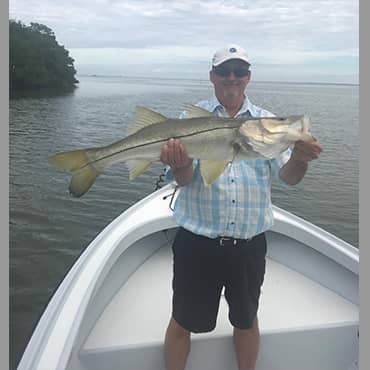
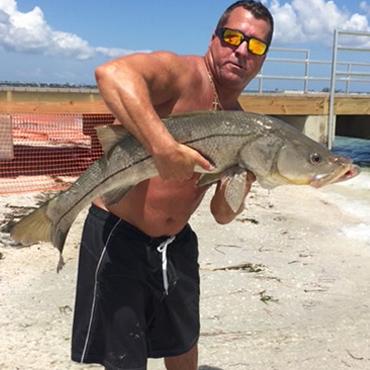
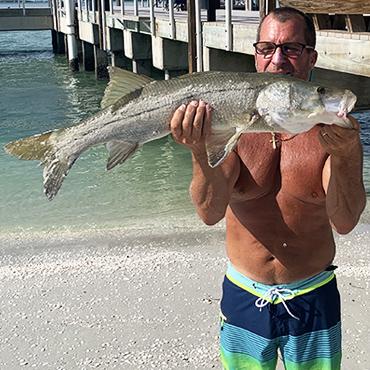
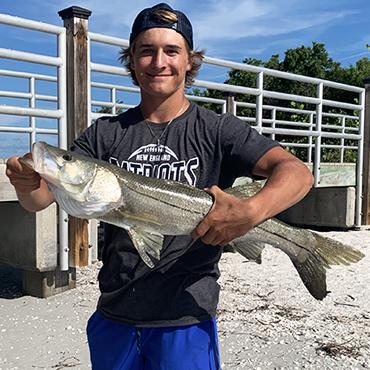
Snook |
|
Flounder |
Permit |
Tarpon |
|
Grouper, Black |
Pompano |
Tripletail |
|
Grouper, Gag |
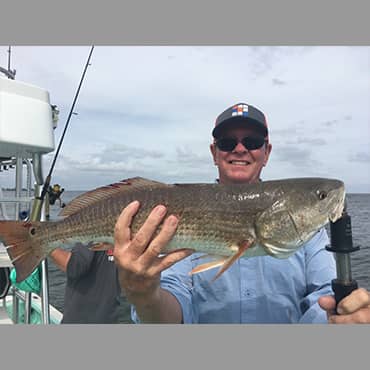
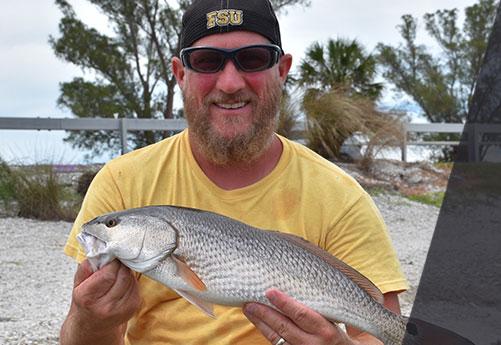
Redfish (Red Drum) |
Trout, Spotted Sea |
|
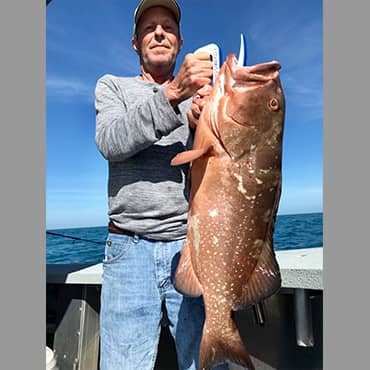
Grouper, Red |
Sheepshead |
|
|
Jack Crevalle |
Snapper, Lane |
|
Click
on thumbnail to open picture.
|
HABITAT: Rocky reefs and wrecks |
|
TYPICAL WEIGHT: 5 to 20 pounds common, 30 to 60 pounds
in deep waters |
|
FOOD QUALITY: Excellent, smoked or fresh |
Regulations
Minimum size - 30" to the fork. 1 per person per day.
General Information
A strong fighter that powers deep and defies lifting with a
great deal of stamina that matches their strength, the Greater
Amberjack have a brown or gold overall color and have a very heavy
body. There are no scutes forward of the tail fin and they have
a dark oblique line extending from forward of the eye to the dorsal
fin.
Distribution
Found in all of Florida, the Bahamas and Caribbean, adults
are common at various depths, ranging from reefs several hundred feet deep to fairly shallow wrecks and reefs. Big ones also come
close to shore at times, particularly in the Keys and the Islands.
Artificial reefs and wrecks all along the Gulf Coast often harbor
huge schools of smaller Amberjack, and many Gulf wrecks are home
to big ones as well.
Tackle and Techniques
Amberjack are most often caught on charter boats on heavy rods
and reels with 50 pound or more test. Experienced light-tackle
fishers can successfully battle them with spinning and baitcasting
and even fly rod rigs. Around wrecks, they frequently follow hooked
fish to boat side, and also may rise to the top voluntarily. They
then can be cast to with surface plugs, spoons, jigs, or big fly
rod streamers and poppers.
Drifting, trolling or casting are options to catch these fighters.
Bait
Live chum will draw Amberjack from the depths. The best bait
is any sort of live fish, the livelier the better.
|
Click
on thumbnail to open picture.
|
HABITAT: Inshore common to bays and lagoons. |
|
TYPICAL WEIGHT: 1 to 20 pounds |
|
FOOD QUALITY: Excellent, especially 6 to 8 pounders |
Regulations
Minimum size - 14". Maximum size - 24". 5 per person
per day. May possess one over 24". Snatching prohibited.
General Information
Somewhat similar to the redfish in shape, but Black Drum are
usually distinguishable by color and always by the feelers or
barbels on the underside of the lower jaw. Young Drum have dark
vertical stripes on white sides. The stripes fade with age and
adult Drum are usually blackish above and whitish below and some
develop a bronze hue. These fish offer a strong, bullish fight.
Distribution
Black Drum can be found in surf and estuaries. Like redfish,
Drum forage along shell bars, shorelines and shallow flats. Big
Drum stick mostly to inside channels and surf.
Tackle and techniques
Surf tackle and saltwater boat rods are used when targeting
big fish, but even lunkers can be caught rather easily on spinning
and casting tackle with a bit of patience. Drum are not avid lure-chasers
but can be taken on slowly worked jigs in deep water and by carefully
presented streamer flies and jigs on the flats. Fly fishing for
these fish is a real challenge.
Bait
Any sort of crustacean, from shrimp to cut blue crab to whole
small crab, make fine bait for Black Drum.
|
Click
on thumbnail to open picture.
|
HABITAT: Inshore or near shore in inlets, bays, among
mangroves, and around buoys and pilings. |
|
TYPICAL WEIGHT: Up to 80 pounds |
|
FOOD QUALITY: Superb |
Regulations
Minimum length - 33" to the fork. 1 per person per day
or 6 per vessel, whichever is less.
General Information
Cobia are year round residents in south Florida and part time
residents in other parts of the state. Along both coasts, anglers
notice cobia migrating northward in the spring and to the south
in the fall. They travel in small schools and are often seen in
the company of large rays. Anglers use the sight of the ray's
wing tips breaking the surface of the water as an indication that
cobia may be present.
The fish spawn in summer and early fall offshore in the Atlantic
Ocean and in the open waters of the northern Gulf of Mexico. Cobia
grow quickly. A two year old fish can be 24" in length.
Distribution
Cobia are usually caught offshore but there are some notable
exceptions. The fish are full time residents in large west coast
bays such as Tampa Bay and Charlotte Harbor. There are also an
increasing number of reports of cobia being caught very close
to shore and in the passes and backwaters along the southwest
coast. Wherever they occur, look for this species around natural
and man-made submerged structures. Anglers without boats have
the best chance of catching a cobia from land off one of the piers
along the Gulf of Mexico coast in the panhandle.
Tackle and techniques
You'll need a medium to heavy duty spinning rod and reel with
15 to 30 pound test line, heavy monofilament leader, and a good
drag system on your reel to go after these fighters. This is necessary
because the fish, once hooked, makes it's initial runs towards
the closest structure. Your job is to turn the fish and keep it
from reaching something the fish can use to cut you off. In the
summer, when the water is warm, cobia will be close to the surface
and you can sight fish for them.
Bait
Cobia have a hard time passing up a small live fish or crab.
Free line the bait when the fish are feeding near the surface
or use just enough weight to get your bait down but still allow
it some freedom to move. A large jig tipped with a chunk of squid
is the most successful artificial lure. The goal is to cast ahead
of the fish and bring it back towards the fish.
|
Click
on thumbnail to open picture.
|
HABITAT: Open sea, often around large floating objects
or weedlines |
|
TYPICAL WEIGHT: 1 to 20 pounds common, 30 to 50 fairly
common |
|
FOOD QUALITY: None better |
Regulations
No minimum size. 10 per person per day.
General Information
A strictly open water fish with striking colors. The body is
golden iridescent with a deep green dorsal fin speckled with blue.
Females spawn from November through July and produce eggs that,
if they survive, will become 36" fish by the time they are
one year old.
Dolphin travel in schools consisting of fish of approximately
the same age and size. Fish less than three pounds are called
chickens. Schoolies range from three to eight pounds. Gaffers
are in excess of 8 pounds and are so called because a gaff is
necessary in order to get the fish in the boat. The largest dolphin
are slammers. These include the jumbo sized males referred to
as bulls, fish easily distinguished by the distinctive lobed forehead.
Distribution
Dolphin are year round residents in south Florida. They regularly
move north along the Atlantic coast in the summertime via the
Gulf Stream. They also migrate to the northern Gulf of Mexico
where there is a viable sport fishery based along the panhandle
coast. Anglers along the west central and southwest coast must
travel at least 50 miles offshore to find these fish as they migrate
up and down the coast.
Tackle and Techniques
Dolphin love to hang around anything that floats. This includes
lines or patches of seaweed and any type of man made or natural
floating debris. Even one small piece of material is enough to
attract a small school of chickens of schoolies. Never pass up
the opportunity to cast your bait around floating objects.
In the absence of floating material trolling is another reliable
way to find the fish. Boats usually run several lines overboard
at the same time. Don't be surprised if you get one fish on and
suddenly find every rod bending under the strain of a fish. Remember,
dolphin travel in schools.
Boat tackle with 20 pound test line or higher works for trolling.
When casting, a medium duty spinning reel with 15 pound test line
will work on the smaller and medium sized fish.
Bait
A rigged ballyhoo is the traditional trolling bait, but one
of the specially designed dolphin and big game lures also bring
in their fare share of fish. When casting around floating debris,
use cut bait or a ballyhoo. If the fish are around and a feeding
frenzy develops, lures, jigs or anything light colored and flashy
will get a strike.
Secrets to Success
* When you catch the first fish, leave it in the water. Chances
are very good that other dolphin will show up to keep the hooked
fish company.
|
Click
on thumbnail to open picture.
|
HABITAT: Inshore and offshore |
|
TYPICAL WEIGHT: 3 to 15 pounds |
|
FOOD QUALITY: Excellent |
Regulations
Minimum size - 12". 10 per person per day. May be harvested by spearing.
Snatching prohibited.
General Information
This flat, bottom dwelling fish, represented in Florida by
two species- the summer and southern flounder, is more common
than many anglers think. The southern is larger of the two species.
While anglers will catch most of these fish on the bottom, the
fish is known to feed at all levels of the water column.
Distribution
The largest fish come from the northern part of Florida although
good numbers of smaller fish are caught in the southern half of
the state. The best places to find flounder are the passes, inlets, near shore waters, and backwater bays close to the Atlantic or
Gulf of Mexico. Peak season is in the fall.
Tackle
The traditional medium duty spinning or bait-casting rod and
reel with 6-20 pound test line and a monofilament leader is more
than sufficient for this species.
Bait
Small live finger mullet are the bait of choice along the Atlantic
coast. Bull minnows are a favorite of upper Gulf coast anglers.
Lures seldom generate strikes by flounder except for jigs tipped
with shrimp and worked slowly along the bottom.
Secrets to Success
* The flounder's bite can be very subtle so you must be feeling
for a gentle tapping. With time you can learn to distinguish the
fish's bite to determine when to set the hook. Resist your temptation
to set the hook as soon as you feel the bite. Let the fish take
the bait and swim away with it. Count to 15 giving the fish time
to swallow the bait, and then set the hook hard.
|
Click
on thumbnails to open pictures.
|
HABITAT: Inshore among mangroves, near seawalls and
bridges. |
|
TYPICAL WEIGHT: 5 to 30 pounds |
|
FOOD QUALITY: Superb - One of the best |
Regulations
Black Grouper: Minimum size - 22".
Closed season in Gulf February 1 to March 31. 4 per person per
day (Gulf).
Gag Grouper: Minimum size - 22". Closed season in Gulf February 1 to
March 31. 2 per person per
day (Gulf).
Red Grouper: Minimum size - 20". Closed season in Gulf February 1 to
March 31. 2 per person per
day (Gulf).
General Information
This group of species share an interesting life history trait.
All groupers begin life as males and over time transform into
females. The spawning season is in the winter and spring except
for the jewfish which spawns in the summer.
Grouper are usually caught offshore grouper but the younger
individuals live in sea grass beds or around mangroves. Occasionally
anglers catch legal sized fish in the deeper holes of the backwaters.
Groupers live close to the bottom and always associate with some
type of submerged structure.
Distribution
There are a number of grouper species caught in Florida. The
gag and red groupers and the jewfish (a species permanently closed
to all harvest) are the most widely distributed species. Most
of the other species - Nassau, Red Hind, Rock Hind, Black, Yellowfin
and Scamp live in and around the coral reefs of extreme south
Florida.
Tackle and Techniques
Grouper fishing is primarily an offshore fishery. Drifting
a bait a foot or so off the bottom is the typical technique used
by recreational anglers. Slow trolling a bait or lure over hard
bottom also produces fish. Standard boat tackle with 20 to 40
pound test line and a 40-80 pond test leader is employed so that
anglers have a chance to turn the fish's head away from an underwater
ledge or piece of manmade structure and bring it to the surface.
Bait
Grouper will eat anything just about anything that comes their
way. A live pinfish, piece of squid, or chunk of fresh cut bait
are proven baits when drifting or at anchor. When trolling anglers
use deep diving saltwater plugs or jigs. Jigs can also work when
worked vertically while drifting or at anchor.
Secrets to Success
Groupers don't move real far for a meal. The prefer to wait
for the meal to come close to where they are and that is usually
only a foot or two from some place of refuge. When you feel a
fish bite, set the hook as soon as you think the fish has the
hook and reel in as much line as you can as quickly as possible.
Monofilament line stretches up to 28% and that give the fish enough
line to duck back into its place of refuge. What you want to do
is prevent this by turning the fish's head up towards the surface.
There is a trend among veteran grouper anglers to use one of the
new braided or fused lines when fishing for grouper. With nearly
no stretch, you have a better chance of turning the fish's head
before it can get under a rock, a condition in which the fish
almost always wins and the angler loses.
|
Click
on thumbnail to open picture.
|
HABITAT: Inshore and offshore - Virtually all Florida
waters |
|
TYPICAL WEIGHT: 1 to 6 pounds common, plentiful up to
12 pounds |
|
FOOD QUALITY: Poor, the meat is dark red and has strong
flavor |
Regulations
None.
General Information
Jack Crevalle have a hard, compressed body with a blunt head
and black spot on the rear edge of the gill cover. They have hard
scutes forward of the sickle-shaped tail. Extremely hard fighters,
these fish usually offer a long first run using their flat sides
to good advantage when waging a tug-of-war.
Distribution
Found in all Florida waters and the Greater Antilles, but Jack
Crevalle are rare in the Bahamas and smaller Caribbean islands.
The Crevalle may show up at any time in virtually all Florida
waters, from the deep reefs to well up coastal rivers. They usually
run in schools, the smaller the individual fish, the larger the
school. The biggest Jacks often cruise in pairs and are usually
found in or near major inlets and around offshore wrecks and reefs
of both coasts, but may come into deep bays and canals where they
chase mullet and often herd the prey against seawalls.
Tackle and Techniques
Most Jacks are fairly small and are caught on the full range
of light tackle by fishers seeking other game. If you target larger
Jacks of 10 pounds or more, sturdy spinning, baitcasting and fly
tackle should be used, with lines no less than 8-pound test.
Bait
Small Jacks will gulf down almost any sort of natural bait,
live or dead, as well as all the popular casting and fly rod lures.
Big Jacks, however, generally like their meals moving very fast.
To assure hookups, using fresh and frisky live fish or quickly-
and noisily-retrieved artificial lures is best. Top water plugs
are good, as are fast-whipped jigs. Fly rodders often have to
work very hard, stripping their streamers or poppers as fast as
their elbows will move.
|
Click
on thumbnail to open picture.
|
HABITAT: Mangrove creeks and bays, Offshore ledges and
reefs |
|
TYPICAL WEIGHT: 5 to 500 pounds |
|
FOOD QUALITY: Delicious BUT PROTECTED and UNLAWFUL to
keep |
Regulations
Total closure.
General Information
This is by far the largest of the Groupers, but at any size,
there's no mistaking a Jewfish. Juveniles are brilliantly marked
with a series of irregular dark brown bars against a light brown
or gray background, extending from head to tail. Numerous black
spots are usually present as well on the head, sides and fins.
Adults have the same pattern but in more subdued shades of brown
that are not so brilliantly contrasted. The tail is round as are
the posterior, dorsal, anal and pectoral fins.
Jewfish are traditionally seen in many sizes from a few pounds
to 500 pounds. They have been reported to reach half a ton. The
really huge fish are rare anymore but are slowly returning. The
World and Florida record is 680 pounds.
The smaller Jewfish are excellent in taste and big ones are
quite good as well. This is the main reason for their precipitous
decline and total closure in Florida in the 1980's.
Distribution
Jewfish are found throughout Florida and the Bahamas. Juveniles
to around 100 pounds frequent mangrove creeks and bays of Southwest Florida, especially the Ten Thousand Islands and Everglades National
Park. Adults can be found at a variety of depths, from holes and
channels of coastal waters out to offshore ledges and reefs. They
can also be found around pilings of bridges and under deepwater
docks and piers.
Tackle and Techniques
Baitcasting, spinning and fly tackle are acceptable for the
inshore fish. Again, though, it takes all the muscle you and your
tackle can come up with to battle Jewfish of 100 pounds or more.
Bait
Jewfish will hit the full range of lures and flies that are
used by snook casters. The best natural baits are live Jack and
live catfish inshore, and live or dead large fish for offshore
giants including bonito and amberjack up to 15 pounds or more.
|
Click
on thumbnail to open picture.
|
HABITAT: No preferred surroundings, follow wherever
good feeding takes them |
|
TYPICAL WEIGHT: 1 to 3 pounds |
|
FOOD QUALITY: Not appetizing, many bones and flesh is
mushy |
Regulations
None.
General Information
A slender, silvery fish with a deeply forked tail and a large,
scoop-shaped lower jaw, these fish offer wild acrobatics when
hooked. They get off spectacular and frequent jumps and larger
ones are strong pullers. Ladyfish are common at 1 to 2 pounds;
3 to 4 pounders are whoppers.
Distribution
Found in all Florida waters, the Bahamas and Caribbean, Ladyfish
occur the full length of both coasts, ranging from the open sea
off beaches and shorelines to inlets and bays and far up coastal
streams. They seem to have no preferred surroundings, but follow
wherever good feeding conditions take them. They love to feed
at night and are common around lighted areas of piers and docks.
They often gather in large schools.
Tackle and Techniques
Ladyfish are scrappy on any light casting tackle, including
fly. They offer great sport on ultralight tackle.
Bait
Most are caught on cut strips, small live fish or live shrimp
by fishers vying for something else, particularly for trout. Ladyfish
are ready strikers on most artificial lures of appropriate size.
Jigs and small top water plugs rate high, as do popping bugs and
small white streamer flies.
|
(Kingfish) Click on thumbnail to
open picture.
|
HABITAT: Near shore and offshore, sometimes around piers. |
|
TYPICAL WEIGHT: 30 pounds |
|
FOOD QUALITY: Good |
Regulations
Minimum size - 24" to the fork. 2
per person per day but is reduced to one fish in the Gulf
and Atlantic when the fishery is closed to all harvest in Federal
waters.
General Information
This migratory species live its entire life in the open waters
of the Atlantic Ocean and Gulf of Mexico. Once fished to dangerously
low levels, king mackerel have rebounded to respectable numbers.
Because this is a pelagic species few details of its life history
are known. Tagging studies suggest that there are two populations
that visit Florida's offshore waters, one centered in the Atlantic
and the other in the Gulf of Mexico.
Distribution
Anglers south of Jupiter Inlet will find kingfish in the Atlantic
year round. North of the inlet the fishery is restricted to the
warmer months of the year. Along the lower Gulf coast the fish
migrate from the keys and appear in the spring and fall. They
are heading to their summer feeding grounds off the Florida panhandle.
King mackerel are almost always taken in open waters, usually
by boats a mile or more offshore. A few fish move close to the
beach and give anglers on the ocean piers and in the surf a chance
to land a big one.
Tackle and Techniques
These strong fighting fish require tough tackle. For anglers
fishing from a boat that means boat tackle with 20 pound test
line or higher. This will work when trolling or drifting. Kingfish
have a mouthful of sharp teeth so you'll need to use a 60-80 pound
test monofilament or wire leader.
Finding these fish can be a chore. Trolling is the fastest
way to cover a large area. Because the fish seldom travel close
enough to the surface to sight fish for them, troll your bait
well below the surface.
Bait
Small live fish are the preferred bait. Cut bait also works
when drifting or trolling. A piece of whole or cut bait with a
plastic skirt is often used when trolling. Large fish shaped plugs
are another good trolling bait.
|
Click
on thumbnail to open picture.
|
HABITAT: Surf, inlets and passes, Gulf wrecks and reefs |
|
TYPICAL WEIGHT: 10 to 50 pounds, 20 to 30 pounders fairly
common |
|
FOOD QUALITY: Excellent |
Regulations
Minimum size - 10" to the fork. Maximum size -
20" to the fork. 6 per person per day aggregate bag of Permit and Pompano. May
possess one over 20" of either Permit or Pompano.
General Information
Permit have a deeper body and blunter head than the pompano.
They have a sickle-shaped tail, no scutes and overall are silver.
Like pompano, small Permit may also show some yellow on the underside.
These fish rate as one of the very best gamefish - a long runner
on the flats and a strong, stubborn deep fighter offshore. They
are also one of the most challenging to fool, especially with
artificial lures.
Distribution
Occurring in all Florida waters, the Bahamas and Caribbean,
Permit are found in the surf, inlets and passes of both coasts
but are more numerous in the southern half of Florida. In warm
weather, they roam South Atlantic reefs and many Gulf wrecks.
Tackle and Techniques
Although offshore Permit are large enough to provide sport
with light and medium saltwater tackle, the epitome of Permit
fishing is to stalk them by sight on shallow flats, and cast directly
to them. Light spinning, baitcasting and fly tackle can be used
in the shallows provided the fisher has a good supply of line
and a means (preferably a guide with a push-pole) of chasing the
fish.
Bait
The best natural bait is any sort of small live crab. Dead
pieces of crab and lobster also work well. Live shrimp are often
accepted, especially if skittered across the surface, and then
allowed to sink. If using small skimmer jigs, try to get the Permit
to follow the lure, then stop it dead and let it sink into the
grass or mud. The best flies are those with weighted or epoxy
heads that will sink in the manner of a leadhead jig.
|
Click
on thumbnail to open picture.
|
HABITAT: Inshore or near shore especially along sandy
beaches, oyster beds, and grass flats. |
|
TYPICAL WEIGHT: Less than 5 pounds |
|
FOOD QUALITY: Superb |
Regulations
Minimum size - 10" to the fork. Maximum size -
20" to the fork. 6 per person per day aggregate bag of Permit and Pompano. May
possess one over 20" of either Permit or Pompano.
General Information
This is definitely the most tasty member of the jack family.
Pompano are very closely related to permit, and you will sometimes
find both species schooling together close to shore along the
west coast.
Distribution
Most pompano are caught within a half mile of the shoreline.
Many are taken by anglers fishing from one of the ocean piers
or from the surf. Pompano are year round residents in south Florida
and summer residents in north Florida.
Tackle and Techniques
Seldom growing over three pounds, pompano are the perfect fish
to go after with light tackle. You can even use ultra-light tackle
with as light as 4-6 pound test line. The pompano's mouth is small
so use a small hook, such as a # 1 or 1/0. Fly rodders can step
down from their usual 8 to 9 weight rigs and use a 7 weight line
and corresponding rod and reel.
Bait
Pompano feed on crustacean and one of their favorites is a
live sand flea. Tackle shops often have them frozen and those
will work if you can't dig up a few live baits for yourself. Sand
fleas are small crabs that live beneath the surface of the beach
in the surf zone. It is easy to find them if you know what to
look for. As the waves recede off the beach look for ripples or
bubbles coming from the sand. They indicate the presence of sand
fleas. To get then simply dig with your hands or use a specially
designed scoop to dig them up. Along the Atlantic coast, around
the Melbourne and Cocoa Beach area, surf anglers like to use clams
for bait. Live shrimp also works well.
Small jigs tipped with a piece of fresh dead shrimp is the
most effective lure. Make your retrieve slow and try to bounce
the jig across the bottom. This action stirs up the sand making
the lure look like a small crustacean working its way along the
bottom.
|
Click
on thumbnail to open picture.
|
HABITAT: Inlets and channels. |
|
TYPICAL WEIGHT: 5 to 25 pounds |
|
FOOD QUALITY: Superb |
Regulations
Minimum size - 18". Maximum size - 27". 1 per person
per day. Gigging, spearing and snatching prohibited. Harvest in
Federal waters is prohibited.
General Information
This is one of the top recreational saltwater gamefish in the
state. Redfish spawn from August to November in the offshore waters
near passes and inlets. September is usually the peak month. Those
that survive the open water larval fish stage, move into the estuaries
as juveniles where they will live for several years. Anglers sometimes
encounter large schools of these young fish, often called rat
reds. The schools do migrate although scientists believe that
they do not move over great distances.
Distribution
At one time the fish was in danger of being over-harvested because
of commercial activity. It's strong recovery led to the recent
change that eliminated the closed season for this species.
The redfish's recovery from the brink of being wiped out is
a direct result of its designation as a "restricted species"
in 1989. This ended the commercial harvesting of the fish, a move
that ultimately saved the species being wiped out by highly efficient
offshore commercial netters. With the change of the redfish's
status to a non-commercial species, stocks have been able to recover
and the fish is now abundant in many parts of the state. Redfish
are now common throughout the coastal waters and near shore areas
of the state. A stocking program in Biscayne Bay has also brought
redfish back to this lower southeast coast are for the first time
in nearly 30 years.
Tackle and Techniques
Anglers have a wide option when it comes to the tackle needed
to catch redfish. When fishing the open waters of the flats try
an ultra-light rod and 2 pound test line. It will definitely test
your skill. A more conventional combination is a 6-7" rod
with 12 to 15 pound test line with a 40 pound test leader. It
will work on the flats, along mangrove shorelines, and in the
deeper waters. In a corresponding fashion, fly fishers can use
an 8 or 9 weight rig and make the fishing interesting by varying
the tippets from 2 to 12 pound test.
Normally redfish move onto the flats to feed when the water
temperature rises above 70 degrees. They will tolerate much higher
temperatures but tend to remain there for less time as the water
temperature approaches the upper 80s.
Tidal stage also has a strong influence on when redfish move
onto the flats. The best time is during the first half of the
flooding or ebbing tide. The fish's advantage over the angler
at this time is water depth. You either need a very shallow draft
boat which can be poled or run with a trolling motor or must wade
onto the flat to get to the fish. Many anglers prefer to wade
because redfish can see and hear boats. An angler walking through
the water is much less obvious to a redfish.
When water temperature drops below 70 degrees, redfish abandon
the flats and head for the slightly deeper and warmer waters of
channels near the flats. The fish still get hungry so work the
drop-offs until you find the fish.
Bait
Redfish grow fast. In one year most are a foot long. To grow
that much redfish must do a lot of eating and most of it comes
from what they pick up off the bottom. Stomach analyses reveal
that their natural diet consists of small crabs and shrimp. This
explains why shrimp is one of the most widely used baits.
Crustaceans may be what you find in the fish's stomachs but
anglers know that with a voracious appetite, redfish will take
a variety of other offerings. Small live baitfish, just about
any jig, gold and silver spoons, and even top water plugs are potential
meals if they are presented correctly. Of these, the top water plug is an interesting bait to use when fishing the flats because
the fish must come to the surface and rollover to get its mouth
in position to strike the bait.
Secrets to Success
* Redfish are very aware of what's going on above the surface
of the water when they are on the flats. They can see and hear
anglers, especially when they are in boats. This is why wading
for them often results in more hook-ups than staying on the boat.
Be quiet and keep a low profile.
* Sightfishing for redfish is one of the most exciting types
of fishing for saltwater anglers. The principle of the technique
is not to cast until you see the fish. You can locate them on
the flats by looking for the fish's tail which breaks the surface
when they stick their nose in the mud to feed (what anglers call
tailing redfish) or when you can see the hump of water they push
in front of them as the cruise across the flats.
When you find tailing fish wait for them finish eating and
begin to move. As they swim away cast your bait ahead and past
the fish. The idea is to have your bait intersect the fish's path
and hopefully catch it's attention. When their nose is in the
mud, the fish often cannot see your bait.
Redfish associate with stingrays. And stingrays, when they
feed, stir up the bottom and create what anglers call a "mud."
This highly visible sign should be an automatic signal to cast
towards the muddy area. Redfish frequently hang around the rays
looking for food that is stirred up by the rays.
Redfish don't move around too much. If you find fish on a flat
or in a channel, it's a good idea to go back to the same spot
the next day. Chances are good that the fish will be there again.
|
Click
on thumbnail to open picture.
|
HABITAT: Inshore or near shore around seawalls, navigation
markers, or over debris. |
|
TYPICAL WEIGHT: Inshore -- 2 pounds; offshore 8 to10
pounds |
|
FOOD QUALITY: Excellent |
Regulations
Minimum size - 12". 15 per person per day.
Snatching prohibited.
General Information
Because of its bold and distinctive black and white vertically
striped body, sheepshead are often referred to as the convict
fish.
Distribution
Sheepshead is one of the "staple" fish in Florida.
It is a year round resident throughout the state. Land bound anglers
find them around bridge and dock pilings and boaters will catch
them around oyster bars and near shore reefs and wrecks.
Tackle and Techniques
You won't need any special tackle for sheepshead. Reels rated
for 6-12 pound test line with a corresponding rod is sufficient
when fishing in the backwaters. Attach 12-18" of 20 pound
test line as a leader and you're ready to go. When fishing offshore
over wrecks and rocks, a medium to heavy duty spinning rig or
a basic boat rod and reel with 20 pound test line and a 40 pound
test leader will make it easy but still keep the fun in catching
these strong fighting and tasty fish.
Bait
This species is a adept bait stealer. Equipped with front teeth
that look remarkably like our front teeth, sheepshead can pick
the bait off your hook without hooking themselves. Towards the
back of their mouth they have molar-like teeth that crush and
grind their food. Live fiddler crabs, live or dead shrimp, and
sand fleas are some of the favorite baits.
Secrets to Success
* When fishing around bridge pilings, use a flat blade shovel
to scrape some of the barnacles off the pilings. This natural
chum often attracts fish to the area. Drift your bait into the
chum slick and wait for the action to begin. Use only enough weight
to keep your bait in the chum.
* Sheepshead have small mouth so select a small, sharp hook.
The first signs of a bite are one or more light taps. Ignore these
and wait until you detect a heavy feeling on the line. That's
when you want to set the hook. Keeping the weight used down to
a minimum gives you the most sensitivity to feel those first few
light taps.
|

Click on thumbnails to open
pictures.
Regulations
Cubera Snapper: Minimum size - 12".
Included within 10 per person per day Snapper bag limit if under 30".
Gray (Mangrove) Snapper: Minimum
size - 10". 5 per person per day. Included within 10 per
person per day Snapper bag limit.
Lane Snapper: Minimum size - 8".
Included within 10 per person per day Snapper bag limit.
Mutton Snapper: Minimum size -
16". Included within 10 per person per day Snapper bag limit.
Red Snapper: Minimum size - 16"
(Gulf). Closed season August 15 to May 31 (Gulf). 2 per
person per day. Included within 10 per person per day Snapper bag
limit.
Schoolmaster Snapper: Minimum size
- 10". Included within 10 per person per day Snapper bag limit.
Vermillion Snapper: Minimum size -
10" (Gulf). 10 per person per day. Not included within 10
per person per day Snapper bag limit.

All
other Snapper: Minimum size - 12". Included within 10
per person per day Snapper bag limit. Includes Blackfin, Dog,
Mahogany, Queen, Silk and Yellowtail.
General Information
The rules for snapper fishing are complicated; perhaps unduly
so according to many anglers. But, with 15 species of snappers
in Florida's waters, the popularity of the fish with anglers,
and the slow growth rate of these species, the regulations are
and will continue to be necessary if over-fishing is to be avoided.
Distribution
The five most common
species are the mangrove (also known as gray), lane, red, yellowtail
and mutton. Mangrove snapper range from mangrove and salt marsh
fringed back bays to offshore hard bottom areas, wrecks, and coral
reefs. Lane snapper have a state-wide distribution but tend to
leave the northern half of Florida during the colder months of
the year. It is the smallest of the major species, maturing by
the time it is 6 inches long.
Red snapper is most abundant in the deeper offshore waters
of the northern part of the state. As evidence of the fish's slow
growth rate, scientists who have done growth studies of red snapper
estimate that a 20 year old red snapper only weighs about 35 pounds.
Yellowtail snapper have a bright yellow streak on the side
of the fish's body running from head to tail. The best place to
catch this species is in southeast Florida, especially the Keys.
Another Keys specialty is the mutton snapper, the last of the
top five species. It is an occasional catch in the offshore waters
of other parts of the state.
Tackle and Techniques
When fishing inside waters for mangrove snapper and offshore
for lane snapper, a light spinning or bait-casting tackle with
6-12
pound test line, the workhorse of the backwater anglers, will
suffice. When heading offshore where you can encounter much larger
specimens, boat tackle with 20-30 pound test line and a heavy
monofilament leader will be necessary.
One unique ways to catch mutton snapper is fishing the flats
in the Florida Keys. It is the only species that routinely visit
these flats, places where anglers traditionally stalk permit.
Fortunately the same tackle, a 7 foot spinning rod with a reel
with 6-12 pound test line or a 7 to 9 weight line and corresponding
rod and reel, used for doing battle with a permit works for muttons.
Snapper fishing is among the easiest styles of saltwater angling
to learn. You drop your bait in the water, usually down to the
bottom unless you're fishing for snapper and using a chum slick,
the fish finds it and bites and you try to get the fish to the
boat. It sounds boring but any fish weighing more than a few pounds
will give you a good fight and quickly change your mind.
Bait
Talk about a non-picky feeder. Snapper will take live shrimp,
small live pinfish, squirrel fish, and ballyhoo or chunks of cut
bait. These also happen to be the same treats that attract grouper.
Using chum to get snapper in a feeding mode is another way
to catch fish. It is the standard method for catching yellowtail
snapper when fishing offshore from the Keys and any place you
fish at night for any snapper species.
When targeting mutton snapper on the flats, try a small live
crab if they are available or a live shrimp. Soft plastic crab
lures are the top artificial bait and crab pattern flies or streamers
that imitate baitfish are the choices for fly fishers.
Secrets to Success
* Snappers actively feed after the sun goes down. Try fishing
your favorite offshore wreck or reef at night and use a chum slick
to let the fish know you're there. The chum can attract hundreds
of fish off the bottom and provide everyone on the boat with enough
action and fish in the cooler.
|
Click
on thumbnail to open picture.
|
HABITAT: Inshore among mangroves, near seawalls and
bridges. |
|
TYPICAL WEIGHT: 5 to 30 pounds |
|
FOOD QUALITY: Superb - One of the best |
Regulations
Minimum size - 28". Maximum size - 33". Closed seasons are December -
February 28 (or 29 if it's leap year) and
May, June, July and August
of each year. 1 fish per person per day. Snook permit required in addition
to saltwater fishing license. Snatching and spearing prohibited.
General Information
Snook may be the perfect gamefish. It is a tremendous fighter,
requires skill to land and is one of the best eating fish you'll
ever taste. Primarily inshore fish, snook don't travel the vast
distance that other species are noted for. Most snook, often referred
to as linesiders, spawn from April to October in the offshore
waters near passes and inlets. The juvenile fish that survive
those first few weeks of life in the open water eventually move
into the estuaries where the fish live most their lives. The fish can
tolerate fresh water for extended periods of time and it is not
unheard of for anglers fishing in fresh water areas that eventually
connect to the coastal waters to catch snook when fishing for
largemouth bass.
There are four species of snook, but anglers don't need to worry
about distinguishing one species from another. Three species,
the fat snook, swordspine snook, and tarpon snook, never get larger
than 18 inches so if caught, would have to be immediately released
due to their size. Anglers are after the common snook, a fish that
can grow to the size of a small log and weigh over 30 pounds.
Distribution
Snook are warm water fish This limits their distribution to
the waters south of Tampa Bay along the west coast and south of
Cape Canaveral along the east coast. When the water temperatures
drop below about 60 degrees, snook head for warmer waters. This
is the reason for the December and January closed seasons. The
fish become very lethargic when the water is cold and can easily
be exploited by unethical anglers. At the northern range of the
fish, some individuals die if they cannot find a warm water refuge.
Snook are most commonly caught in protected waters and passes.
They prefer to hang around overhanging mangroves, dock pilings,
and any submerged structure. Some fish are caught in the near shore waters over reefs and other structure.
Tackle and Techniques
A medium weight spinning or bait-casting rod and reel with
8 to 20 pound test line is a good idea. Snook are strong fighters.
When fishing in areas where there is an abundance of cover, stick
to tackle at the heavier end of this range. This fish is noted
for its ability to run towards submerged structures and cut you
off. It is also essential that you use a heavy monofilament leader,
in the 40 to 80 pound range, to reduce break-offs caused by the
fish cutting the line with their sharp gill covers.
Snook like to rest in an eddy and wait for the moving water
to bring them food. For this reason, you will find anglers fishing
for snook where the tidal flow is strong and there are eddies
for the fish to use.
Bait
Snook will eat anything that looks good to them and is in range
when they are hungry. Their favorite food is a small live fish,
but live shrimp and small crabs are seldom turned down. Anglers
should learn to use cast nets if they don't already know so that
they can net their own bait. Usually you can freeline a bait fish
and let it drift with the current. Occasionally a split shot is
added to the line in areas where the current is especially strong.
Artificial lures are also popular baits for snook. Both soft
and hard bodied lures shaped like baitfish, jigs tipped with shrimp
and gold or silver spoons are traditional favorites. MirrOlures
and Zara Spooks are two of the more popular brand names that you
hear many when talking about catching snook. Ask at a local bait
and tackle store which size, style and colors combination is working
best at the moment.
When fishing for snook, cast your bait as close to the structure
or shoreline as possible. Snook often will pass up a good looking
meal if it doesn't pass right in front of its nose. Top snook
anglers have good casting skills and can skip a bait underneath
an overhanging mangrove branch without getting hung up.
Secrets to Success
* Fish at night for snook. Look for lights on docks and along
seawalls that are close to the water. Snook will lurk in the shadows
and dart out into the light when they see a meal swim by. Since
small bait fish are attracted to the light and they are the snook's
favorite meal your chances of finding snook around any light are
pretty good.
* Anglers fishing from a seawall, dock or bridge that don't
have a light, can dangle a Coleman lantern just above the water's
surface. Once the light attracts the baitfish, the snook won't
be far behind.
* When the water temperature drops into the 60s snook may move
far up small tidal creeks and canals. Tolerant of freshwater they
will move into these regions for brief periods. Look for them
to be in the deepest holes you can find and hope they are hungry.
|
Click
on thumbnail to open picture.
|
HABITAT: Offshore. |
|
TYPICAL WEIGHT: 5 to 150 pounds |
|
FOOD QUALITY: None |
Regulations
2 per person per day limit. Requires a $50 tarpon
tag to possess or harvest. Snatching or spearing prohibited. Boca
Grande Pass has seasonal regulations. Contact DMFM for current
information.
General Information
Tarpon are very primitive fish. The swim bladder of these fish
connects to the fish's throat and they can use it as a primitive
lung. This allows the smaller and younger fish to gulp air when
the water is low in dissolved oxygen. This is a common occurrence
in the shallow backwater bays during the summer, the place where
small tarpon spend most of their time. One of the ways to scout
for the presence of the "silver king" is to look and
listen for tarpon to "roll" on the surface. That's when
they gulp air and pass it into the swim bladder.
Tarpon begin their spawn in mid May and reach peak activity
in June and July. Large, females may carry as many as 20 million
eggs. The fish swim offshore to spawn but within 30 to 45 days,
the young fish that have survived are an inch long and are moving
into the estuaries where they will live for the next few years.
The small fish move far up the tidal creeks looking for small
protected areas where they can live and escape their predators.
Some of these fish become land-locked in small ponds and ditches
as summer rains subside and the mangrove forest dries out. This
explains why many people see and catch tarpon in areas where it
looks like the fish could never have reached.
Tarpon take from 10 to 13 years to mature. At this time the
males weigh about 40 pounds and the females are close to 60 pounds.
Once sexually mature a tarpon can reproduce for up to 45 years.
Fortunately for anglers, tarpon are not in danger of being
over fished. The fish has a very low food value and virtually
no one keeps one for food. They are exclusively a sport fish.
That fact keeps the number of fish that are caught and kept at
a low level. When you combine this with the $50 special tag that
anglers need in order to take a specimen, the number of "kills"
attributed to anglers goes down even further. The special permit,
instituted in 1989, lowered the number of tarpon kept by sport
anglers from 300 to about 80 in 1993.
Distribution
The best tarpon fishing is along the coast in the southern
half of the state however tarpon are caught anywhere along the
coast during the summer months when the water is warm.
Tackle and Techniques
Big fish require big tackle and those going after the 150 pounders
and up need to use a seven to eight foot stout rod and a reel
capable of holding 200 yards of 15-30 pound test line. A good
bass flipping stick will work in lieu of buying a special tarpon
rod.. Fly rodders need 11 or 12 weight line and corresponding
rod and reel. Seven to nine weight combinations work for tarpon
up to 30 pounds. Use 30 pound test backing and have at least 200
yards on the spool in addition to the fly line.
Whether using conventional tackle or a fly rod, a 20 to 40
pound leader, depending on the size line you're using, is necessary.
Attach a one foot piece of 100 pound test line to the end of the
leader and tie the hook to that. The heavy line is necessary helps
prevent the fish from fraying or chewing through the line. Many
anglers tie a Bimini Twist on the end of their spinning or plug
rods and then tie the leader to that. This knot doubles the end
of the line and makes a stronger connection with the leader. Hooks
ranging from 3/0 to 7/0 are used with size varying according to
the size of bait being used and angler preference.
Bait
Live mullet or crabs are the top choice for live baiters. Tarpon
will also take other live baits such as large shrimp, ladyfish,
catfish, and pinfish. Contrary to what some anglers say, tarpon
will bite a piece of cut bait. When tarpon are feeding on a school
of bait fish, they stun some fish as they attack the school. A
piece of cut bait apparently resembles a stunned fish close enough
for a tarpon to go after it.
Spinning and casting anglers can use lures that resemble mullet
and other baitfish. Some of the more popular lures used by tarpon
anglers are the Zara Spook, Creek Chub Darter, Chartreuse Bomber
Long A, 52m MirrOlure, Bagley Finger Mullet, Ratlin' Flash, and
Ratl' Trap. Experienced anglers usually replace the hooks that
come on the lures with 3X strength hooks because of the tremendous
biting force of the fish.
Streamers are considered one of the best tarpon flies. Orange
and red are popular colors. The cockroach is another widely used
fly.
Secrets to Success
* Always use a sharp hook. Tarpon have very hard, bony mouths,
Sharpen hooks before you use them, even ones fresh out of the
package.
* Let big tarpon have control the first few minutes. This is
when they do the most jumping and all you can really do is hold
on anyway.
* Dip your rod when the fish jumps. This gives the line some
slack and you are less likely to have the fish spit out the lure
or break the line.
* Tarpon spook very easily when there is noise in the water.
Try to turn the motor off when close to your site and use a trolling
motor or push pole to get in casting distance.
* When you feel a fish on the line, let it run with the bait
for a few seconds then set the hook hard
* You will jump more fish than you will catch so enjoy whatever
thrills each fish provides
* When using artificial lures or flies, make your retrieve
slow and straight. Don't retrieve the lure so that it is coming
at the fish as this usually scares them off. Make a presentation
that brings the lure across or at a quartering diagonal away from
the direction in which the fish is swimming.
|
Click
on thumbnail to open picture.
|
HABITAT: Inshore or near shore over grass, sand, and
mud bottoms. |
|
TYPICAL WEIGHT: 4 to10 pounds |
|
FOOD QUALITY: Superb |
Regulations
Minimum size - 15". Maximum size - 20". One fish over
20" per person. Closed season in the S. region - November and
December. 4 per person per day in the S. region. Closed season in
the N. region - February. 5 per person per day in the N.
region.
S. Region means state waters south of and including Pinellas County on the
Gulf and south of and including Volusia County on the Atlantic.
N. Region means state waters north of the Pinellas County on the Gulf and
north of Volusia County on the Atlantic.
General Information
If you wanted to nickname a fish the "comeback kid"
the spotted sea trout would be the leading candidate. Until two
years ago, the numbers of trout being caught was on the decline.
But, on July 1, 1995, Florida's newest constitutional amendment
took effect and most commercial nets were banned form the state's
coastal waters. Since then there has been a renaissance in trout
fishing. Anglers report catching the fish on a year round basis
and in more numbers than previous years.
Spotted sea trout spawn from spring through the summer in the
estuaries along both coasts. As juveniles, the fish live secret
lives hidden among sea grass beds. Once they mature, the fish
seldom move far from where they spawned. Females live for 6-8
years and males live 5-8 years.
Distribution
Trout are found throughout the state except they become scarce
from Lake Worth to Miami and in the lower Florida Keys. A lack
of estuarine habitat in these areas accounts for the rarity of
the fish.
Tackle and Techniques
Light spinning or bait-casting tackle with 6-12 pound test
line and 20 pound test monofilament leader is sufficient. The
best place to find trout is in the sea grass beds. You can cast
while drifting across a grass flat or troll using an electric
trolling motor.
Bait
A live shrimp or baitfish bait rigged to a line with a popping
cork is the number one method for trout fishing. Jigs tipped with
a small piece of shrimp and gold spoons are very effective artificial
baits. Weedless varieties are desirable when you fish in the sea
grass.
Secrets to Success
* This species segregates itself by size. When you encounter
a congregation of trout, chances are real good they will all be
within an inch or two of each other. If they are too small, move
on and look for the bigger ones.
|
Click
on thumbnail to open picture.
|
HABITAT: Inshore and Offshore |
|
TYPICAL WEIGHT: 2 to 12 pounds |
|
FOOD QUALITY: One of the best |
Regulations
Minimum size - 15". 2 per person per day.
Hook and line gear only. Snatching prohibited.
General Information
Tripletail have a deep, somewhat rounded shape and gives the
appearance of an oversized panfish. The color varies but is usually
brownish and mottled. The head is concave above the mouth. Most
run 2 to 12 pounds, but rare catches reach 30 or more.
Despite its clumsy looks, the Tripletail is a good gamefish
in all respects. It willingly strikes artificial lures and its
fight is characterized by short, frantic runs and startling jumps.
Big ones in deep water are also good at bulldogging. Like Cobia,
Tripletail are adept at fouling lines.
Distribution
Found in Florida, the Bahamas and Caribbean, most are found
closer to shore in most coastal areas during warm months, and
in larger bays usually around markers or trap floats.
Tackle and Techniques
Casting tackle - fly, plug or spinning - provides the best
and most spectacular sport with Tripletails, but saltwater outfits
with lines up to 30-pound test are not out of place for big fish
in tight places.
Bait
Streamer flies, plastic and bucktail jigs and mirror plugs
are among the pet lures. The best natural baits are live shrimp
and small live fish. Strip baits and dead shrimp are also taken.
|
Click
on thumbnail to open picture.
|
HABITAT: Mostly coastal, offshore at times |
|
TYPICAL WEIGHT: 1 to 3 pounds common, 5 to 7 fairly
common |
|
FOOD QUALITY: Good, especially smoked or fried |
Regulations
12" minimum size limit (fork); no closed season; 15 per person
per day limit. Transfer of Spanish Mackerel to other vessels at sea is
prohibited.
General Information
This species is highly migratory. In general, schools of fish
move northward along the Atlantic and Gulf Coast in the spring
and make the return trip south in the fall. An open water species,
Spanish mackerel spawn offshore of Florida beginning in April.
Distribution
This species is caught somewhere in Florida every month of
the year. Year round action occurs in extreme south Florida including
the Keys. In the spring the migration begins and anglers along
both coasts start seeing the fish show up as the ocean waters
warm up. The schools of mackerel follow the warming trend and
by June are commonly caught in the northern Gulf of Mexico and
off the Jacksonville coast.. There will remain here, especially
in the Gulf, until the fall when the first cold fronts send the
fish south for the winter.
With mackerel being migratory and swimming in schools, anglers
may find them around in huge numbers one day and nearly gone a
day or two later. You can catch this species from the surf, off
ocean piers and from a boat anywhere from inside the passes to
a mile or two of shore along the Atlantic coast or five miles
offshore along the Gulf of Mexico coast.
Tackle and Techniques
Medium duty spinning or bait casting tackle with 6-12 pound
test line is suitable. Use a heavy monofilament leader or a small
diameter wire leader. This fish has a mouthful of small sharp
teeth that can cut a monofilament leader.
A good way to locate the schools of fish is to look for birds
such as pelicans and terns. If you see groups of them working
a small area it's a good indication that they are feeding on a
school of baitfish. In the absence of the birds, look for a large
patch of disturbed water. That's also an indication of the baitfish.
If mackerel are around it's a good bet that they will be under
the baitfish and feeding on them.
Another way to locate schools of fish is to troll with a spoon
or jig. Even at a slow speed you can cover a lot of water in a
short period of time. Eventually you will find some fish if they
are in the area. When you hook the first fish continue to work
the area. Being a schooling species there will be more than one
fish around.
Bait
Spanish mackerel like live shrimp or baitfish. Hook the bait
and free-line it in the water column. For trolling or casting
a spoon or jigs work best. If you see the fish but they don't
seem to be hungry try changing to a smaller sized bait or lure.
Secrets to Success
* This species segregates itself by size. When you encounter
a congregation of trout, chances are real good they will all be
within an inch or two of each other. If they are too small, move
on and look for the bigger ones.
|
|